Showing posts with label Author Interviews. Show all posts

Charlotte McConaghy Interview Part 2.

Thursday, March 19, 2009


Charlotte McConaghy's debut novel, Arrival, has been a hit with Adele, Lisa and I. After thoughly enjoying the novel the Aussie YA Alliance has chosen this week to focus on Charlotte and her novel. We conducted a MEGA chat room interview last night and it's been broken into 4 parts. (Links to the other part at the bottom of the interview).


Of all the characters you created, who is your favourite?

I'm completely in love with Jane and Fern. I can't get enough of them! Fern is ultra hot the way I imagine him!


Did you base any of the characters off of people you know?

No, they are all completely imaginary. However I did name a character after my brother Liam, in the hopes that it would one day entice him into reading it.No such luck yet. You'd think having a warrior emperor named after you would get someone reading...


What can you tell us about Book 2? We need some details (we are a little fixated on what's going to happen)

Okay, I can tell you that it is very much in the works. I finished off the second draft today!!!


What's book 2 called?

I don't have a name for it yet. I'll have to mull it over for a while yet. I'm terrible with names. I find it the most difficult thing about these books because there is so much in them!


When’s book 2 being released?

I don't have a date for it yet, but hopefully before the end of the year. Sorry, guys, I'm not being very helpful am I? Haha, yeah I'll definitely stick to the one word idea.


Who do you think you are most like...out of the Strangers?

I think what I like about all of my characters, is the fact that I can create qualities in all of them that I can aspire to. I'd like to be Jane, of course, but that's just wishful thinking. lol


Want to read the rest of the interview?


Part Two: Right here.

Part Three: Look At That Book.

Part Four: Persnickety Snark.


Arrival can be purchased online here.


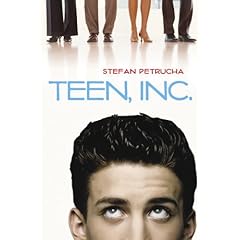
Interview with Stefan Petrucha.

Tuesday, March 3, 2009


Stefan Petrucha has written a crazy amount of novels and graphic novels, and the list just keeps growing. His latest novel The Rule of Won has been widely read and loved by a large percentage of the blogosphere. Including me. (Check out my review here). Want to know more about him? Check out his website here.


What was your inspiration for The Rule of Won?


Going back to my teen years, I’ve always been fascinated by New Age ideas. More recently, I was stunned by the popularity of The Secret, especially since, far from being “secret” in any sense of the word, it seemed to be just a collection of old ideas in new packaging. But Oprah endorsed it, and it’s sales were practically propping up the publishing industry for a year or so.

What do you think of ideas like The Rule?

Positive thinking’s great. Believing in yourself, believing the world is full of possibilities can open you up in a life-changing way. On the flipside, not believing in your own potential can shut you down, make it practically impossible to accomplish anything.

So that aspect’s terrific, useful and healthy, but when you take it to an extreme, when you argue that the universe somehow has to give you whatever you ask for, that people who are starving or dying of disease do so because deep down they’re asking for it, that’s something else entirely. Aside from being irrational and utterly narcissistic, it’s dangerous. You can’t have everything. As the current economy is pointing out to peple all across the globe right now, real life is full of tough choices. Having to make those choices defines what we are.


Did you learn anything interesting while you were studying for The Rule of Won?

Aside from reading The Secret and some of the books it was based on (which go back to the 1910s), I did come across a particularly fascinating story about a panel conference in the eighties, where the idea of the Rule of Attraction was being discussed by believers and critics.

It kind of summed up some of my ideas on the subject when at one point, a gentleman held up a picture of a baby with a horrible both defect and said, “Are you telling me this child wanted to be born this way?” One of the believers coughed nervously but finally said, “Yes.” It’s stunning how far some people will go to defend irrational beliefs.

Similarly, writing the novel gave me a chance to go back and watch Mondo Kane, which is mentioned in the book. It’s a really garish, dated documentary, but it did have an interesting section on the cargo cults of the Vanuatu, a tribe that built fake airports from bamboo in the hopes of attracting cargo planes, which they believe carry gifts from the gods.


One song that you think describes or suits The Rule of Won?

Well, there’s the one I wrote, “The Rule of Won” available on iTunes and Amazon, and as a free download at my website, http://www.petrucha.com/! Past that there’s that old song recently re-used in a children’s commercial, “Gimme that, gimme that, gimme, gimme, gimme that.” Don’t know who recorded that one. And maybe the George Harrison tune off the Beatle’s Let it Be album, I, Me, Mine.

Why do you write for YA?

They pay me! :) But seriously, I broke into writing doing comic books (aka graphic novels), so in some ways teens have always been a big part of my audience. Writing YA seemed a natural. I also write for “adult” markets, but don’t really see it as all that different, other than generally having a teen main character.

If anything, a lot of YA is actually far more inventive, engrossing and edgy than what you’ll find in the mainstream fiction sections. I’ve always been a big fan of M.T. Anderson for instance. Feed, and his more recent Octavian Nothing books are nothing short of brilliant.

Any advice for aspiring writers?

Well, some writers advise you to write what you like, and that’s good advice for being happy, but to be a professional writer, to sell something, you have to write what other people like, and that’s not always the same thing. With that in mind, my advice is to read everything you can get your hands on, even stuff you don’t like, and try to figure out how and why it works. In the end, I think it’s more about developing great taste then writing what you like. Writing is communication, and communication is only half about you, the other half is about the person/people you’re trying to communicate with.

What are you reading at the moment?


I’m very pleased to be working on a vampire thriller for the mass market that takes place across about a century. It starts in 17th century America and ends in 19th century Europe, during Napoleon’s reign. As a result, I’m reading a lot of interesting historical material, including a book from a very strange children’s series from the 1890s called Young Puritans in King Philip’s War. I’m also reading some fascinating material about the discover of the Rosetta Stone by French workers after Napoleon’s invasion of Egypt.


Fiction wise, the last story I read was a science fiction piece called Lobsters by Charles Stross I was at a Boston science fiction convention a few weeks back and it coming up on everyone’s must-read list. It did not disappoint.

What are you working on now?

For Papercutz, the edgy tween graphic novel company, I continue to script the Nancy Drew graphic novels with my wife, Sarah Kinney. I’m also penning a few stories for their Tales from the Crypt series (including a Twilight satire co-written with my daughter Maia!)

Past that, I have two mainstream adult projects I’m currently working on, the vampire thriller mentioned earlier, which I think will be my best work to date, and a non-fiction project based on a popular paranormal reality show that I’m having a great time with. The contracts for those aren’t signed yet, so I can’t say much more.

I also recently completed my third book for Walker, Split – about a teen who leads two very different lives – and so far reaction from my publishers has been terrific. I’m very excited about that one as well. It looks like a great coming year for me, writing wise. And hey, thanks for having me!


Thank-you so much for stopping by Stefan! :)


--Allie.

Author Interview: Melina Marchetta.

Saturday, November 22, 2008


Melina Marchetta is an Australian author with four very popular books released: Looking For Alibrandi her first novel which she wrote when she was twenty one has won numerous awards and is one of Australia’s favourite YA novels, In 2000 Looking for Alibrandi hit the big screen, starring Pia Miranda and Anthony LaPaglia and Melina wrote the screenplay. Her other four acclaimed novels are: Saving Francesca, On the Jellicoe Road and Finnikin of the Rock (expect it out in the U.S in 2010), she’s currently working on her fifth novel The Piper’s Son.


Can you tell people who don't know much about your latest novel, Finnikin of the Rock all about it?


After the slaughter of its beloved royal family, the kingdom of Lumatere is cursed and half its people are trapped inside never to be heard from, and the other half are scattered in exile across the Land. Ten years later, Finnikin, once the best friend of the young prince and the son of the captain of the king’s guard, travels the land taking care of Lumateran refugees. Until he’s called to an abbey where a young woman, named Evanjalin, claims she can walk through the sleep of those trapped inside, as well as claiming that the prince is alive. Finnikin doesn’t believe her, but they’re stuck with each other and it all starts from there.


Who was the hardest character to write?


Definitely, Finnikin. He’s a bit pigheaded, at times, really. But I loved sitting back and watching Evanjalin slap him down. Although it’s not written in first person, most of the action is seen through his eyes, so I had to keep him more emotionally held back than the narrators of my other novels.


Who was your favourite character?


Perri the Savage. He’s the second in command of the Guard. A very dark character, who as a child and young man was a violent bully. But I wanted to show what happens when a character is trusted and the Captain of the Guard trusts him with his son, Finnikin and from that point on there’s no turning back with Perri. When I was a year coordinator at a boys’ school, sometimes you’d get the naughtiest, less trust worthy kid to run your errands and have the keys to your office. It was a gamble, but most times it worked because they took trust seriously.
Evanjalin is a favourite as well. As much as this is Finnikin’s journey, Evanjalin isn’t merely the love interest. She’s the one who challenges him and controls the narrative. But I had to be careful with her. I wanted her to be respected by the reader for all the right reasons. Sometimes, a female character is raved about because she knows how to fight and defend herself with the best of them and really, all that means is that we like her because she’s demonstrated traditional male hero traits. I didn’t want to do that with her. Apart from one or two fight scenes she’s forced to participate in, I wanted to show how she uses her brain and her faith to get them through situations and although you feel you can’t trust her, I’d like to think that the reader, like Finnikin, can’t help loving her and wanting to follow her.


What was your inspiration for Finnikin of the Rock?


Inspiration never really comes from one place. Sometimes a character hangs out with you, gives you a bit of information and you go with it. I’m the grand daughter of migrants. Displacement and loss of homeland are part of my story.


A lot of readers of Just Listen Book Reviews have yet to read Finnikin of the Rock because it's yet to be released in the U.S, but a lot of them have read On the Jellicoe Road, can you tell us about your inspiration for that?


A strange inspiration. I just wanted to write a boarding school story because I love them. On the surface it might look like a story about the territory war between three factions of this particular area, but for me, Jellicoe is about what happens when the lines between being enemies and friends are blurred. It’s about gathering community when community has been wiped out and it’s about the role fate plays in our lives and how we either become reactive to it, or proactive.


On The Jellicoe Road was a pretty intense novel, was it hard for you to write?


Oh very. I can’t even read the last fifty pages without crying and it’s my book and I know what happens! But I love the strong bonds in this novel, especially the relationship between Taylor and Jonah. It’s a tough book on the reader. I always say, ‘Be very patient. It’s not Alibrandi and Francesca. In Jellicoe, you find out things at the same time Taylor does and sometimes it’s a long time coming but I’d love to think that the patience pays off.


Of all your characters, do you think that you can choose a favourite?


Too hard. I think it’s Frankie Spinelli (SF) Her story is personal to me so I feel I know her well and I love her relationship with the very pragmatic Will (who at times reminds me of that stubborn Finnikin). And of course I love Tom Mackee from Saving Francesca because I’m writing his story in The Piper’s Son (see below)


When did you decide that you wanted to be a writer?


When I was writing Looking for Alibrandi at the age of 21 and knew I wanted that story to be published.


Do you have any advice for young aspiring writers?


My first novel was rejected about six times. It was re-written about ten times and took about six or seven years to be published. This writing business isn’t for those who have no passion for their work. You can’t give up.


Why do you write for young adults?


I tend to say that I write about this age group rather than for this age group. I think the age of seventeen is a powerful time in a person’s life because it could be the first time you make the really big decisions on your own rather than having to rely on your parents or teachers to make them for you. It’s a fascinating age and comes equipped with conflict. Perfect for a writer.


Can you tell us (in extreme detail) about the novel you're currently working on, The Piper's Son?


Hmmm. Haven’t learnt how to articulate this one yet so this is going to sound like a ramble. Sequel to Saving Francesca except it’s about Tom Mackee. The gang is 21. Tom’s estranged from the girls because of an awful family tragedy two years prior. He just couldn’t cope and gets lost for a while. At the start of the story he’s back in Frankie and Justine’s life, reluctantly. He’s a dish pig at the pub the girls work at that belongs to Justine’s uncle. They’re all still obsessed with music and used to be in a band together at university.
The rest of their people are overseas and their story is about how they cope with the distances between them. Frankie’s still with Will (I couldn’t have put two more different people together but somehow they work) and Tom has to make amends with Tara Finke because of something intense that happened to them in their second year of uni. That relationship is explored in a series of angry, funny, poignant emails and phone calls. It’s hard to conduct a love story when they are never in the same room but I’m hoping it works because I find it pretty romantic having to rely on words.
Mostly, it’s about not being able to bury your dead and the impact that has on Tom’s family. But for all the sadness, they are intensely dark- humoured people and I’ve had fun with them, despite the fact that I could easily cry every time I write a scene. Tom’s hard to write because he can’t articulate how he’s feeling.
The grown-ups get more of a story in this one, especially his pregnant Aunt Georgie and her estranged partner, Sam. (not quite the same themes as Mia and Robert in SF, but same dynamics) as well as Tom’s very fragile relationship with his father. It’s got a cast of thousands in the same way Saving Francesca has, but it’s still a small book with big themes. How to do all that without it being a sloppy cliché? I’m working very hard at it, I promise, but I think I’ve done it before and I can do it again. I never thought I’d say I’m crazy mad for Tom Mackee, but I am.


Favourite novel of all time?


My first was Anne of Green Gables. I’ll say over and over again that my life changed when Anne hit Gilbert Blythe over the head with the slate and that it influences my writing because I think I use that scene metaphorically over and over again in my novels – think Francesca Spinelli and Will Trombal in the Tolstoy/Trotsky face off (Saving Francesca)


Anything else you want to add?


Only that I suppose it’s difficult changing genres for both the writer and her readers. But I’m ecstatic about the reviews and letters for Finnikin. I either get them from people who are avid fantasy readers or those who have never read fantasy before. Once or twice I read a negative blog and I just have to just put it down to a reader not connecting with the world I’ve created or having their own expectations of what the novel should be before they start reading it. Someone commented on their disappointment that the action with the villain is off screen. But for me the villain isn’t the one-dimensional imposter king. It’s the hearts and mind of good people who turned their back on others who were suffering. It’s why I used the Primo Levi poem. Regardless of when it was written (Levi was an inmate at Auschwitz) he speaks about retribution - of what happens to people who look the other way when bad things are happening. Perhaps, deep down, that’s what I wanted to say.


Thank-you so much Melina!!


(Remember that if you post a comment on this interview you get another entry into my contest where you have the chance to win all of Melina's books.)